

Azure HPC Recipe Document for Samadii SciV
1 Introduction
This document briefly explains the steps to install and run Samadii-Sciv application on a Virtual Machine deployed in Azure Cloud Platform and presents the performance results.
This recipe document covers the following topics: -
- Deploy & connect a required virtual machine on Azure platform.
- Install required NVIDIA drivers in virtual machine.
- Install Application on virtual machine.
- Install license manager for current application
- Performance results of current application on azure virtual machine
- Azure consumption
- Summary
2 Deploy Virtual Machine on Azure Cloud Platform
2.1 Azure Cloud Architecture for Application
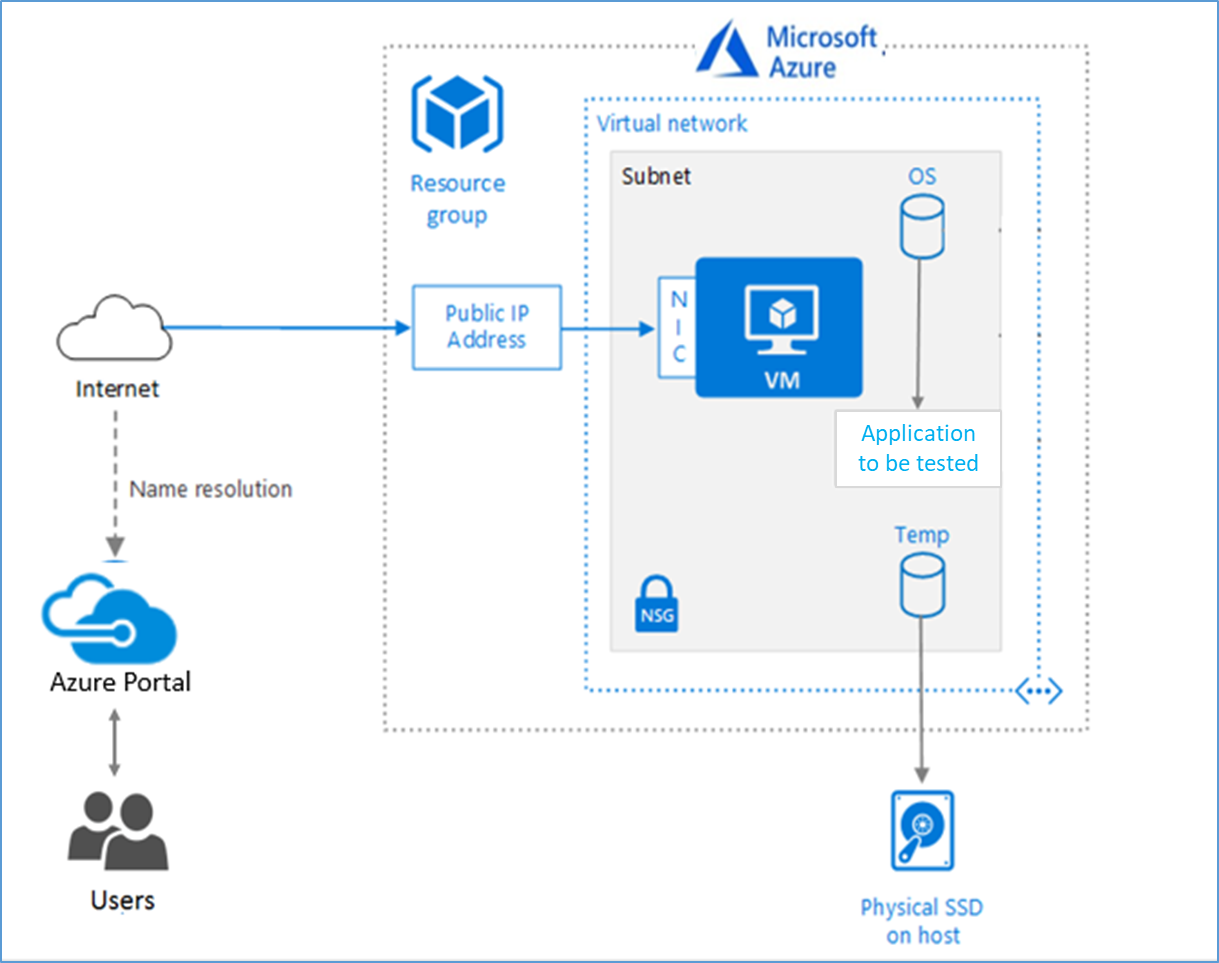
The below Architecture explains the virtual machine running on an Azure Platform
2.2 Azure Virtual Machine (VM)
A VM is a virtualized instance of a computer that can perform almost all of the same functions as a computer, including running applications and operating systems.
An Azure VM gives the flexibility of virtualization without having to buy and maintain the physical hardware that runs it. However, user still need to maintain the VM by performing tasks, such as configuring, patching, and installing the software that runs on it.
Things to be considered before deploying a VM,
- The names of the application resources
- The location where the resources are stored
- The size of the VM
- The operating system that the VM runs
- The configuration of the VM
- The related resources that the VM needs
There are different sizes and options for the Azure virtual machines one can use to run apps and workloads. Depending on the workload user has to choose the appropriate VM size or complete list check this https://docs.microsoft.com/en-us/azure/virtual-machines/sizes/.
To evaluate the performance of Samadii-Plasma on Azure Platform , NVv3, NCasT4_v3, NCv3 , NDv4 virtual machines are deployed .
|
Size |
GPU Name |
vCPU |
Memory: GiB |
Max data disks |
GPU |
GPU memory: GiB |
Max uncached disk throughput: IOPS/MBps) |
Temp Storage (SSD): GiB |
Max NICs |
|
Standard NV12s v3 |
Tesla M60 |
12 |
112 |
12 |
1 |
8 |
20000/200 |
320 |
4 |
|
Standard_NC4as_T4_v3 |
Tesla T4 |
4 |
28 |
8 |
1 |
16 |
- |
180 |
2 |
|
Standard_NC6s_v3 |
V100 |
6 |
112 |
12 |
1 |
16 |
20000 / 200 |
736 |
4 |
|
Standard ND96asr v4 |
A100 |
96 |
900 |
32 |
8 |
40 |
80,000 / 800 |
6000 |
8 |
To Analyse the performance of Samadii-Sciv on Azure Platform below VM’s are deployed.
1) Standard NV12s v3 : NVv3-series is powered by NVIDIA M60GPUs and Intel E5-2690 v4 (Broadwell) CPUs (2.60GHz). The “NV48s_v3” VM has NVIDIA Grid Technology with Intel cores and Intel Hyper-Threading Technology. Each GPU in NVv3 instances comes with a GRID license, this license gives the flexibility to use an NV instance as a virtual workstation for a single user, or 25 concurrent users can connect to the VM for a virtual application scenario.
2) Standard NC6s_v3: This VM belongs to the Ncv3-series These VMs are powered by NVIDIA Tesla V100 GPUs. These GPUs can provide 1.5x the computational performance of the NCv2-series.
3) Standard_NC4as_T4_v3: These Series VMs are powered by Nvidia T4GPUs and AMD EPYC 7V12(Rome) CPUs. The “NC64as_T4_v3” VM has 4 NVIDIA T4 GPUs with 16 GB of memory each, up to 64 non-multithreaded AMD processor cores with a total memory of 448GB.
4) Standard_ND96asr_v4: This VM is powered by NVIDIA Ampere A100 Tensor Core GPUs and 96 physical 2nd-generation AMD Epyc™ CPU cores (2.44GHz). The “ND96asr_v4” VM has 8 GPUs with 40 GB of memory each and is supported by 96 AMD processor cores with a total memory of 921GB. Each GPU features NVLINK 3.0 connectivity for communication within the VM.
2.3 Create a Virtual Machine on Azure Platform
Sign into Azure
Sign into the Azure portal by using https://portal.azure.com/
Free Trial subscriptionsaren't eligible for limit or quota increases. If user have aFree Trial subscription, user can upgrade to aPay-As-You-Gosubscription
After the successful sign in or sign up, one has to upgrade the Azure subscription to Pay-As-You-Go to deploy a Virtual machine. For deployment, the user must have regional vCPU quota which can be obtained by raising a request.
The step-by-step procedure to increase the vCPU quota is given below,
https://docs.microsoft.com/en-us/azure/azure-portal/supportability/per-vm-quota-requests
The step-by-step procedure to deploy Virtual machine is given below,
- Type virtual machines in the marketplace search.
- Under Services, select Virtual machines.
- In the Virtual machines page, select Create Then Virtual machine.
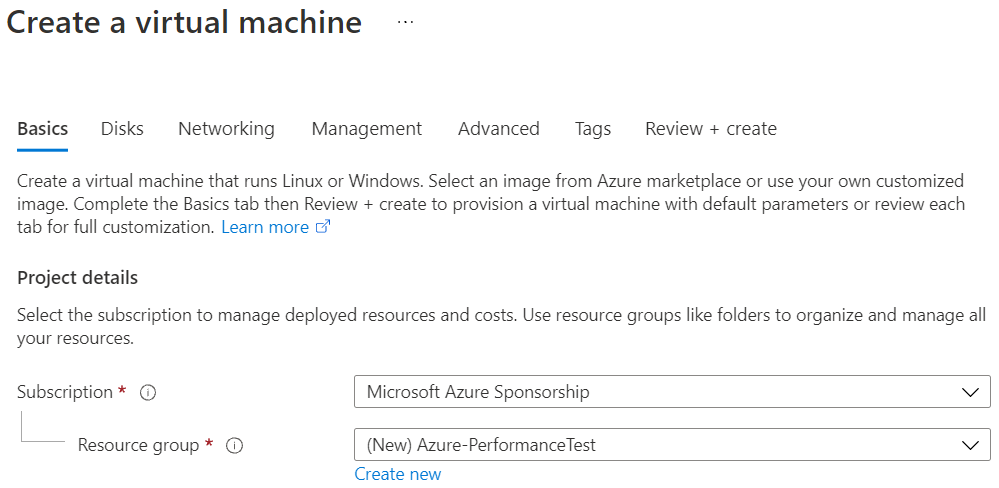
- In the Basics tab, under Project details, make sure the correct subscription is selected and then choose to Create new resource group. Type Azure- Performance Test(user choice) for the name.
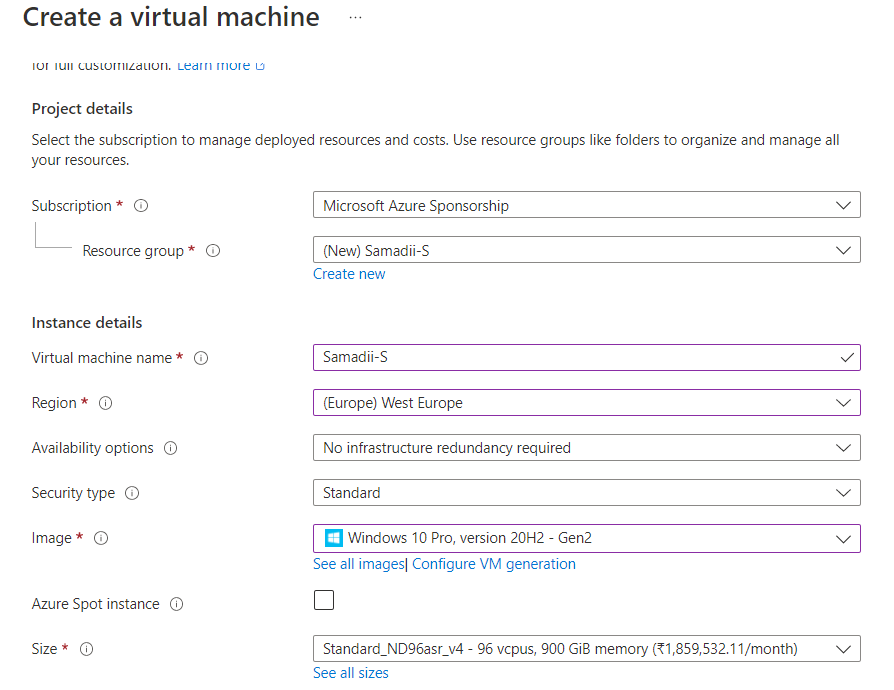
- Under Instance details, type Azure-VM (user choice) for the Virtual machine name and choose West Europe for your Region. Choose Windows 10 pro, Version 20H2-Gen2 for the Image and Standard_ND96asr_v4 for the Size (user choice). Leave the other defaults.
Note:
- Region must be decided based on where you are going to deploy a Virtual machine. To avoid the network latency, the region should be near to the location where the VM is to be deployed.
- Image selection is of user choice based on the application user can choose the image (Windows 10, Linux based OS and Windows Server)
- Under Administrator account, provide a username, such as Azureuser and a password. The password must be at least 12 characters long and meet the defined complexity requirements.

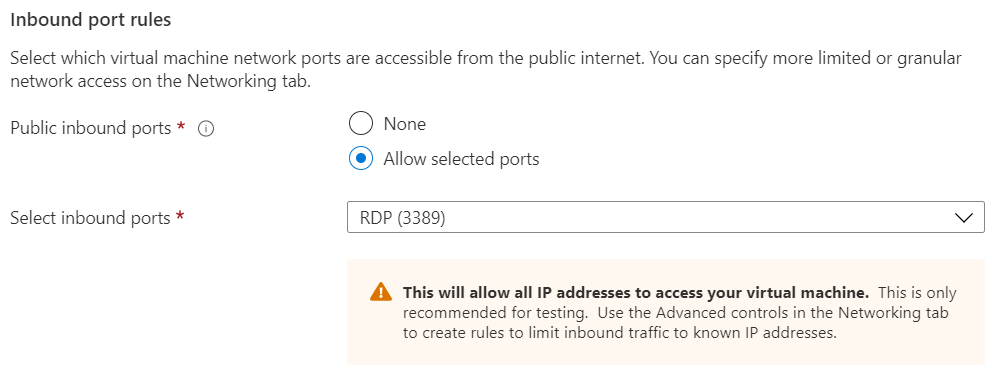
- Under Inbound port rules, choose Allow selected ports and then select RDP (3389) and HTTP (80) from the drop-down.
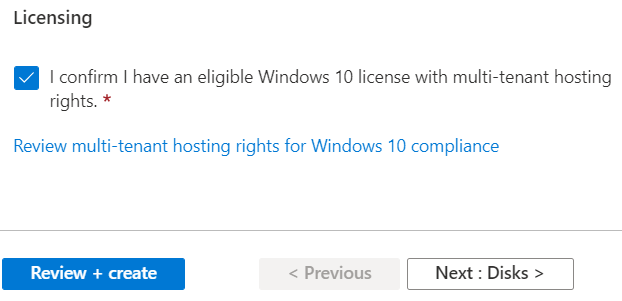
- Under the Licencing click the check box
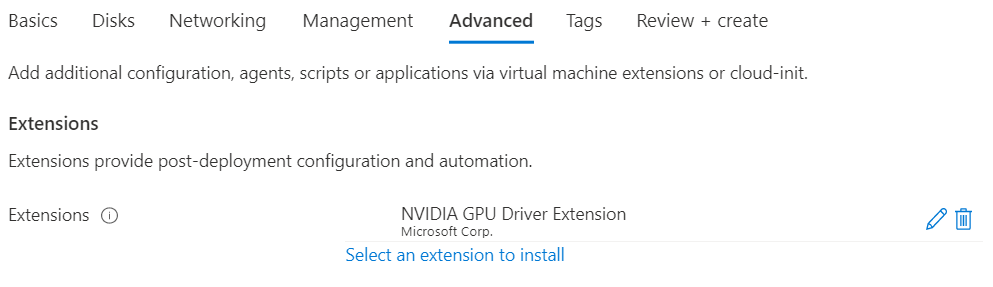
- In Advanced tab, under the Extensions click Select an extension to install, select NVIDIA GPU Driver Extension (user choice)
- Leave the remaining defaults and then select the Review + create button at the bottom of the page.
- After validation runs, select the Create button at the bottom of the page.

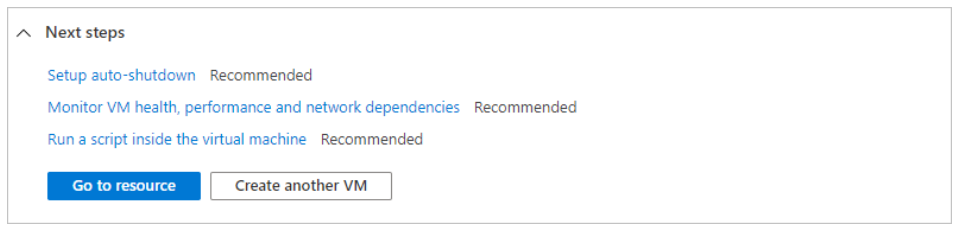
- After deployment is complete, select Go to resource.
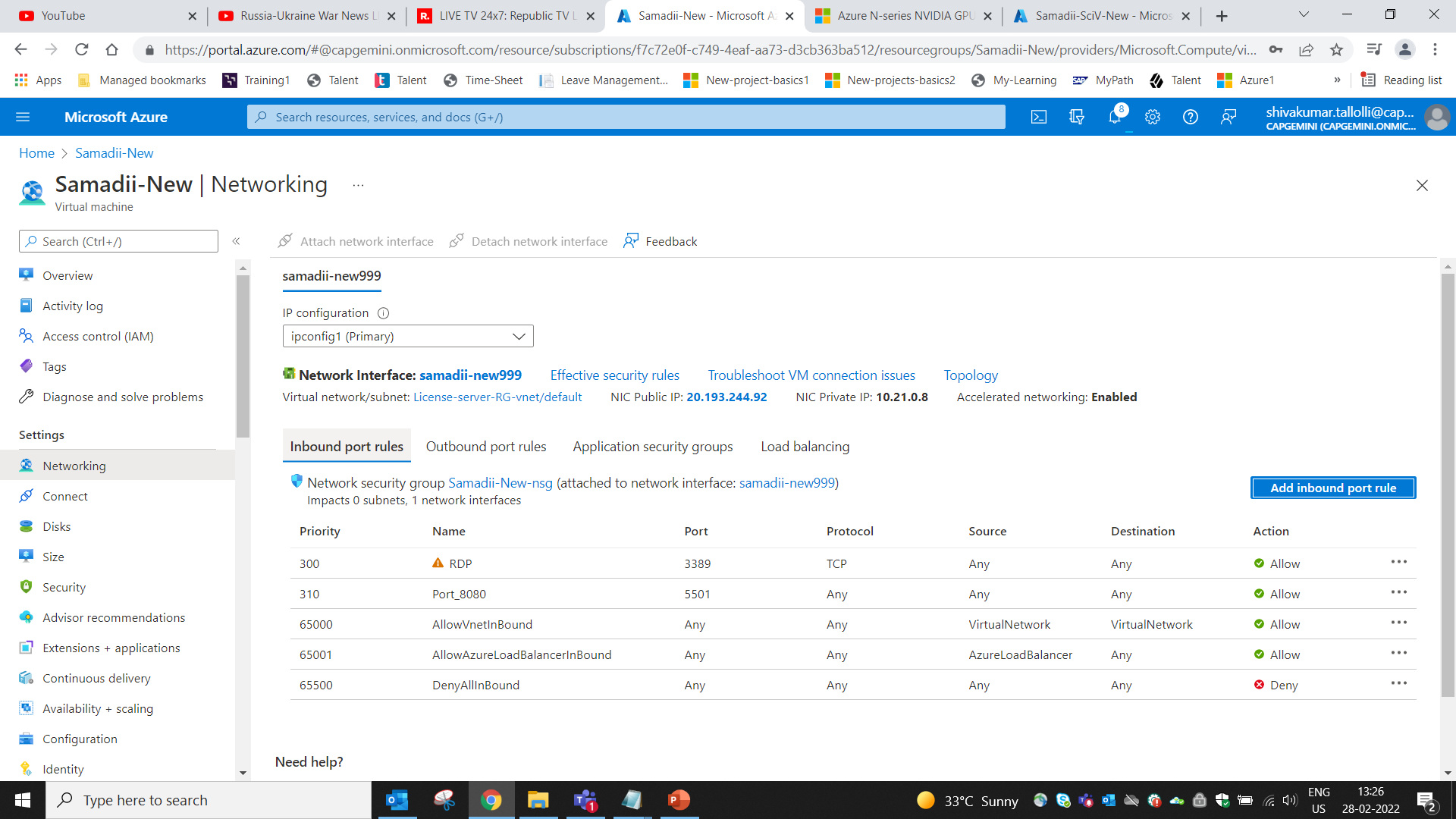
- Add inbound and outbound port rules with Port # 5501

2.4 Connect to virtual machine
Create a remote desktop connection to the virtual machine. These directions tell user how to connect to a VM from a Windows computer. On a Mac, user need an RDP client such as thisRemote Desktop Clientfrom the Mac App Store.
- On the overview page for a virtual machine, select the Connect button then select RDP.
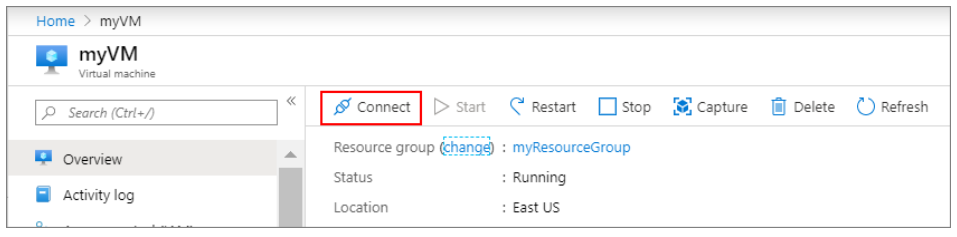
- In the Connect with RDP page, keep the default options to connect by IP address, over port 3389, and click Download RDP file.
- Open the downloaded RDP file and click Connect when prompted.
- In the Windows Security window, select More choices and then Use a different account. Type the username as localhost\username, enter the password created for the virtual machine, and then click OK.
- User may receive a certificate warning during the sign-in process. Click Yes or Continue to create the connection.
2.5 Install Nvidia Drivers
To take advantage of the GPU capabilities of Azure N-series VMs backed by NVIDIA GPUs, user must install NVIDIA GPU drivers.
In two ways user can install the drivers,
- TheNVIDIA GPU Driver Extensioninstalls appropriate NVIDIA CUDA or GRID drivers on an N-series VM. Install or manage the extension using the Azure portal.
- Install NVIDIA GPU drivers manually. (For the manual installation procedure follow https://docs.microsoft.com/en-us/azure/virtual-machines/windows/n-series-driver-setup/)
3 Install Samadii-Sciv Application on Virtual Machine:
3.1 License Manager Installation
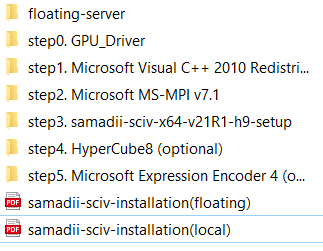
Data provided by ISV will contain all the installation files required for Sciv as shown below.
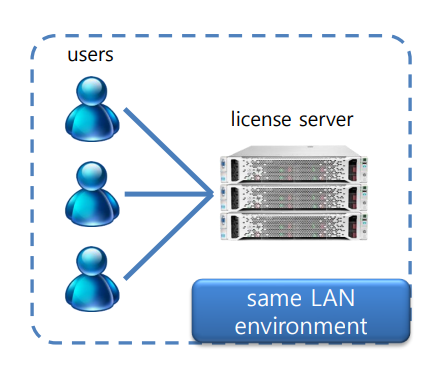
1) samadii-lm is the floating license server program. It is a windows service program that allows multiple users to access the license in the same LAN environment. Licence server needs to be installed in the Licence server VM which is different from the client VM where actual Samadii-Sciv application will be installed.
2)Install the Samadii-Sciv License Server using the licence setup file “samadii-lms-v5.0.2-setup” provided in the input data. 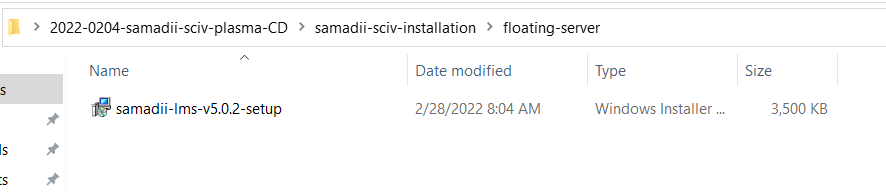
3) Once the licence server is setup, a folder with name Network License Manager will be created in the path “C:\Program Files\Metariver Technology\samadii-lms-v5 “
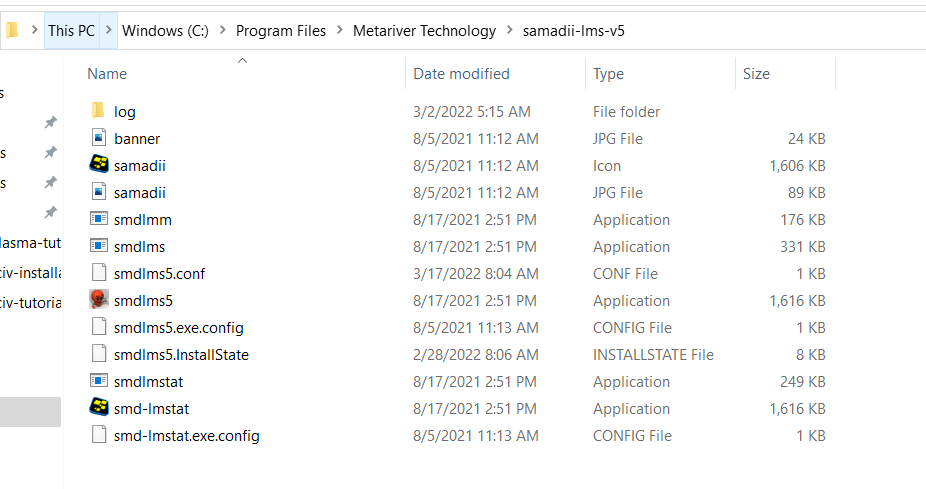
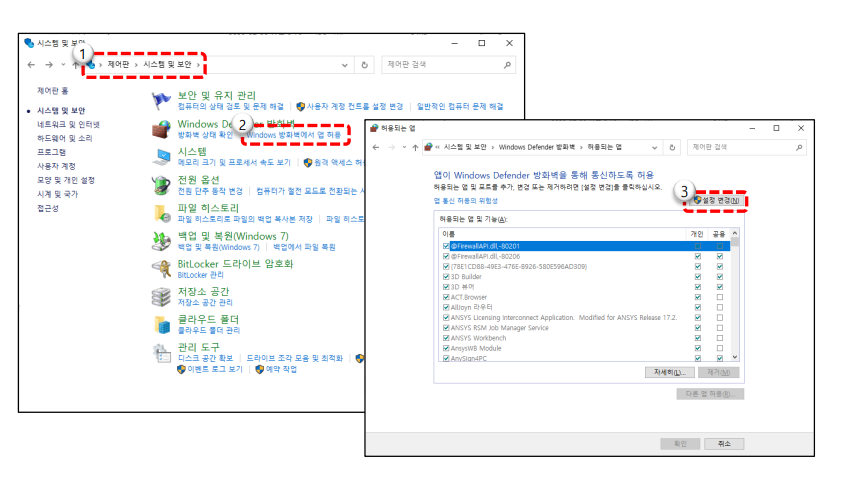
4) Please run Control Panel -> System and Security -> Allow apps in Windows Firewall.
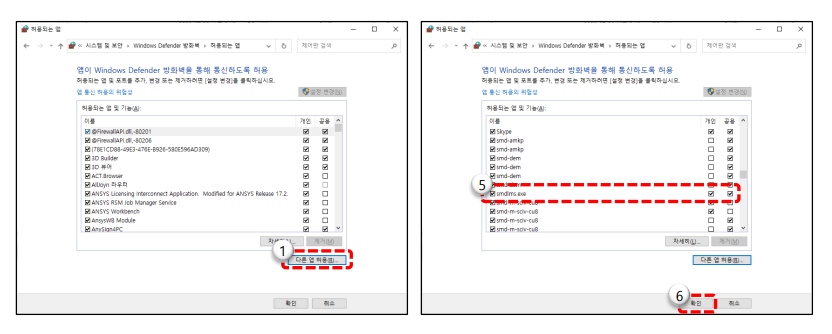
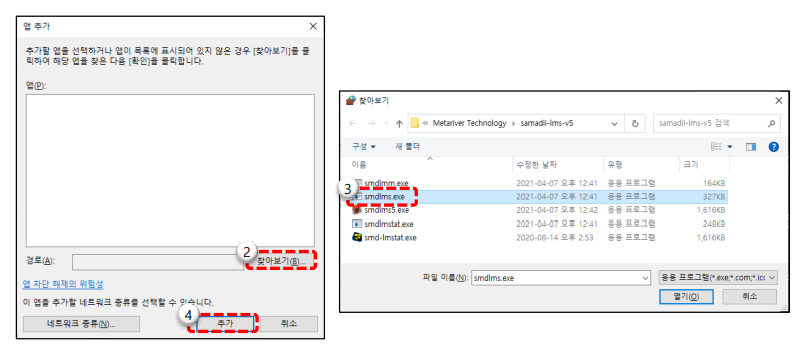
5) In the licence Server VM add the Samadii-Sciv licence manager exe file to firewall exceptions as shown below in the windows defender firewall.
6) Start the Samadii – Sciv licence services in Task manager as show below.
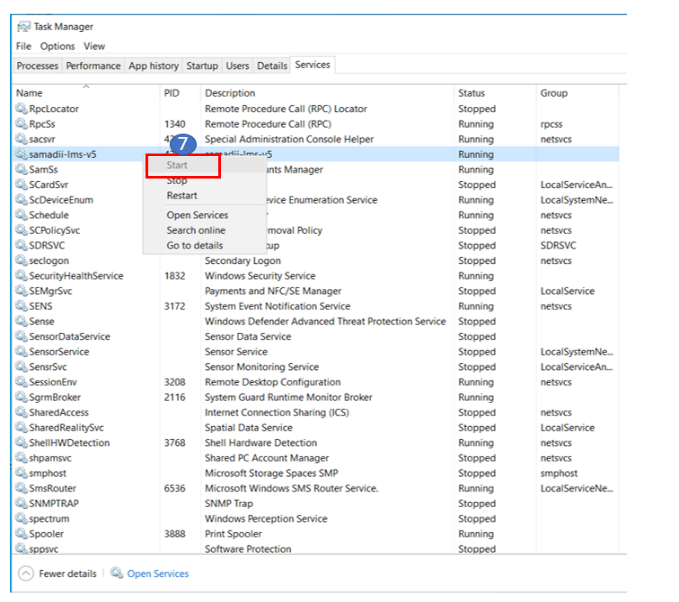
7) Share the log file generated in the previous step to ISV, to generate the licence key file.
8) Copy the issued license file provided by ISV to the folder where the server is installed.
C:\Program Files\Metariver Technology\samadii-lms-v5
3.2 Product Installation procedure
There are few pre-requisites to be followed before installing the Samadii-SciV
- Once the Client VM is deployed, add inbound and outbound rules for the port no 5501 in the windows firewall settings of the Client VM.
- Below softwares / hardware’s are required for Samadii apps to work.
- Microsoft Windows 10(x64) OS
- nVidia CUDA-enabled GPU(s): Tesla/Quadro/GeForce series
- Microsoft Visual C++ 2010 Redistributable Package SP1
- Microsoft MS-MPI v7.1
- Microsoft .Net framework 4.5
- samadii™ setup files
3.3 Samadii Sciv Installation
Click on the setup file and start the Installation.
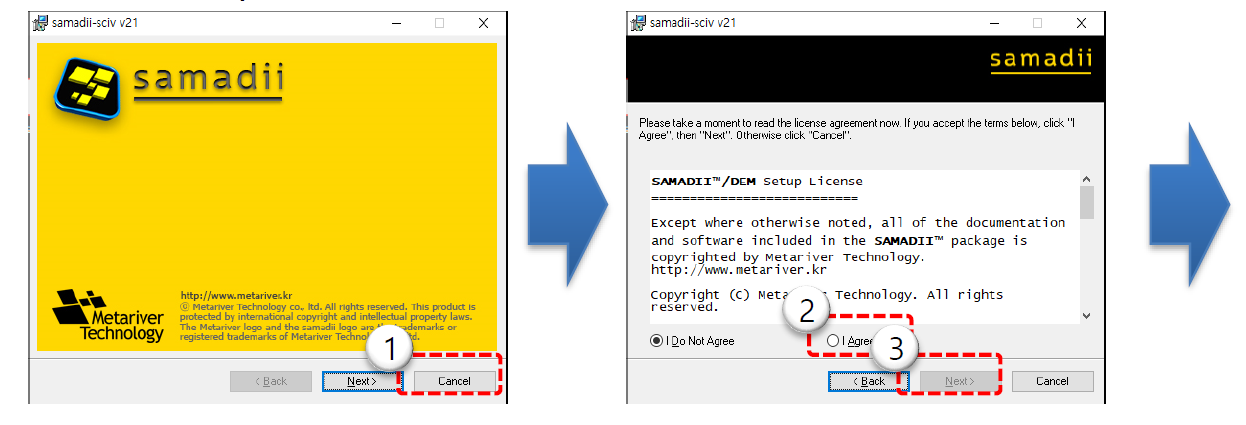
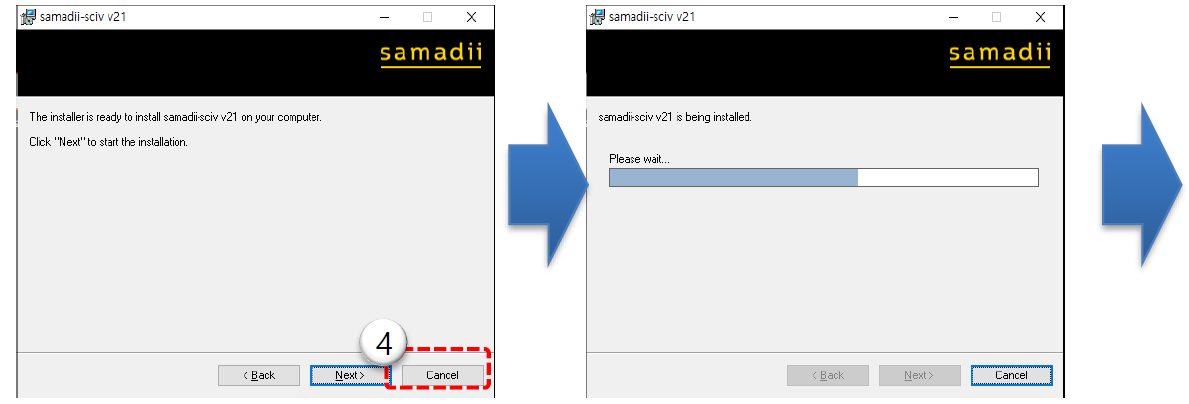
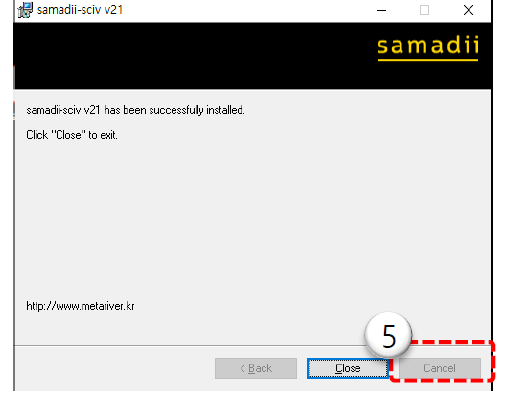
3.4 License server configuration with Samadii-Sciv application
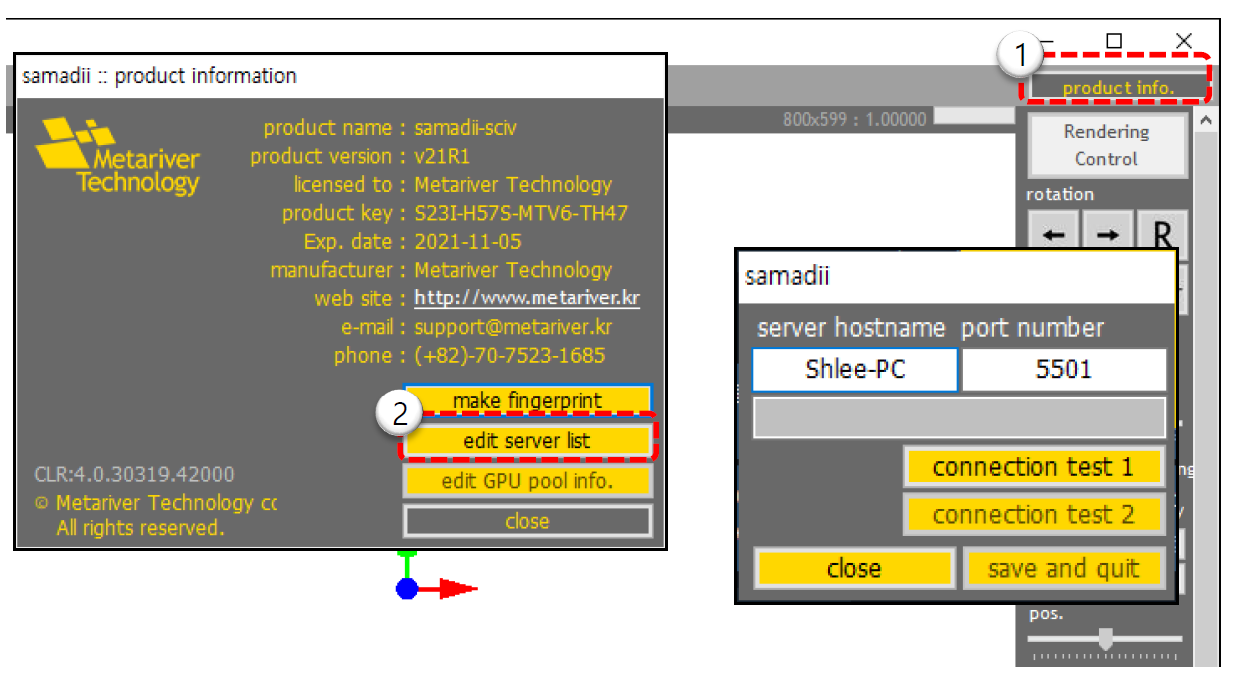 After installing the Sciv Application, execute the application and open the “edit server list” window and enter the licence server name / ip address to make sure the client VM establishes the network connection with the license server.
In “host name” enter the floating server name or IP address and in the “port number” enter the default port number that is 5501.Then check the connection with “Connection test 1” and “Connection test 2” and click on save and quit.
4 Performance results of Samadii-Sciv on Azure Virtual Machines
4.1 Samadii-Sciv overview:
Samadii/SCIV (Statistical Contact in Vacuum) is an analysis interpretation program that uses direct Method Monte Carlo in the rarefied gas domain, the behaviour of fluids, deposition, and chemical reactions, etc. Generally, the analysis of liquid flow is analysed by using the Navier-Stokes equation to interpret the results this equation comes from the continuum hypothesis but, we cannot use the Navier-Stokes equation because this hypothesis doesn’t apply for a rarefied gas domain. Mostly, semiconductors, displays, manufacturing processes many of organic as well as inorganic material are constantly in deposition or etching process. The manufacturing process needs nanometre thickness since it needs deposition and etching. Samadii analyses These manufacturing processes and those are achieved through a vacuum chamber used for displays, semiconductors equipment, and optimization
Based on GPU Computing, samadii/Sciv (Statistical Contact in Vacuum) analyses fluid behaviour, deposition, and chemical reactions on rarefied gas flow regime, by using DSMC (Direct Simulation Monte Carlo) methods. In general continuum regime, solving Navier-Stokes equation is regarded as to analyse fluid behaviour; but this assumption cannot be applied in rarefied gas regime. Because continuum fluid dynamics does not agree that liquid and gaseous substances are composed of molecules, but it regards its motion as a continuous fluid. Samadii/Sciv can implement a variety of inlet and outlet conditions; and it can be applied to the collisions on the wall surface, the deposition, the temperature conditions, and various chemical reactions.
Samadii-SciV (Statistical Contact in Vacuum) uses Direct Simulation Monte Carlo Method (DSMC) on GPU architecture and CUDA technology for modelling material deposition for OLED, LED, display, and semiconductor manufacturing industries.
4.2 Samadii-Sciv on Azure Platform
To carry out the Samadii-Sciv simulations, the right hardware with the latest CPUs and GPUs are required. Microsoft partnered with Nvidia provides the required and suitable Infrastructure and hardware on the Azure cloud platform. It provides the latest and fastest computes capabilities for both CPU and GPU-intensive workloads.
|
Operating system |
NDv4 |
NCv3 VM |
NCasT4 |
NVv3 VM |
|
Operating system version |
Windows (Windows 10 Pro-20H2) |
Windows (Windows 10 Pro-20H2) |
Windows (Windows 10 Pro-20H2) |
Windows (Windows 10 Pro-20H2) |
|
OS Architecture |
X86-64 |
X86-64 |
X86-64 |
X86-64 |
|
Processor |
AMD EPYC 7V12 64-Core Processor 2.44 GHz (2 processors) |
Intel(R) Xeon(R) CPU E5-2690 v4 |
AMD EPYC 7V12 64-Core Processor 2.44 GHz |
Intel(R) Xeon(R) CPU E5-2690 v4 |
5 Samadii-Sciv Performance Results
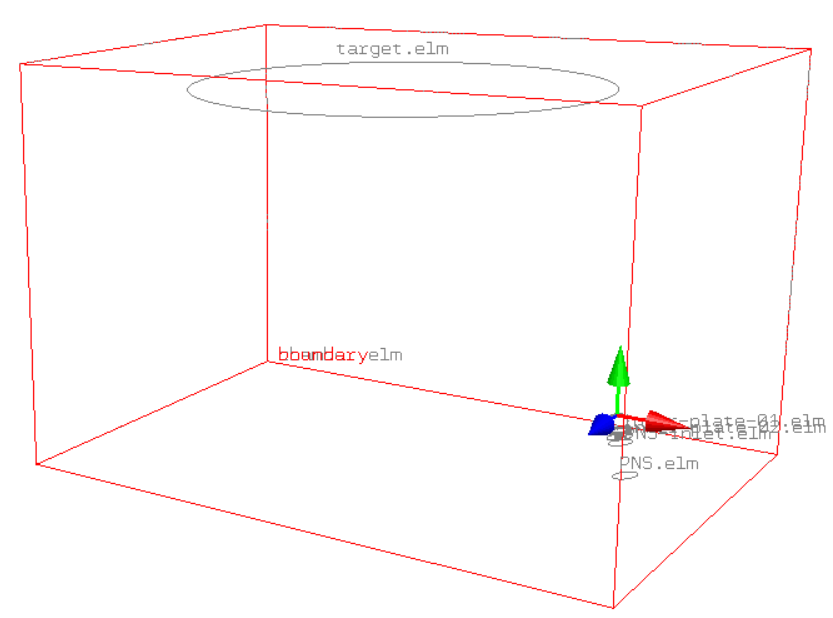
5.1.1 Model Details
1) PNS

5.1.2 Performance Results
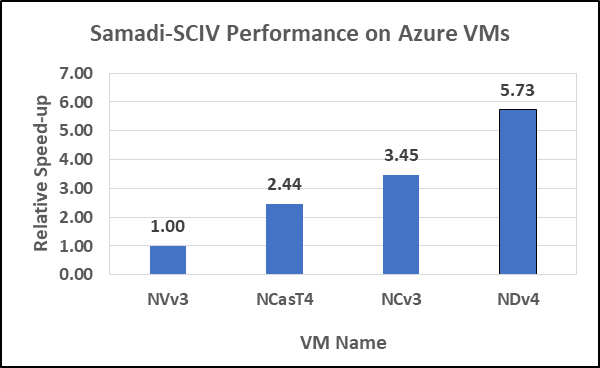
Performance tests have been performed on the provided models, and the elapsed run time and speed up factors have been determined and presented below.
|
VM Name |
Model Name: PNS |
|
|
Elapsed Time in Sec |
Relative Speed Up |
|
|
NVv3 |
93483.74 |
1.00 |
|
NCasT4 |
38311.8 |
2.44 |
|
NCv3 |
27096.83 |
3.45 |
|
NDv4 |
16322.98 |
5.73 |
6 Azure Cost
For the below cost reports, the application installation time is not considered and only the time taken to run all provided models in Samadii-Sciv on NDv4, NCv3, NCasT4, NVv3 virtual machines are considered, and license cost is not included.
The hourly rates for Azure Virtual Machines reported here are subject to change. For the current rates, please refer the link “https://azure.microsoft.com/en-in/pricing/calculator/”
|
VM Name |
# GPUs |
Azure VM hourly cost ($) |
Wall clock time (Hours) |
Azure consumption |
|
Standard NV12s v3 |
1 |
$2.20 |
25.97 |
$57.13 |
|
Standard_NC4as_T4_v3 |
1 |
$0.89 |
10.64 |
$9.47 |
|
Standard_NC6s_v3 |
1 |
$4.56 |
7.53 |
$34.32 |
|
Standard ND96asr v4 |
8 |
$45.43 |
4.53 |
$205.99 |
7 Summary
- Samadii-Sciv Application is successfully deployed and tested on NDv4, NCv3, NCasT4 & NVv3 series Azure Virtual Machines.
- We could see a good performance scale up of Samadii-SCIV on NCasT4, NCv3 and NDV4 Virtual Machines.
- The NCasT4 Virtual Machine has shown very good Performance and is very cost efficient
- The NDv4 VM has shown the maximum scale-up performance out of the 4 VMs
8 Running Samadii Sciv V21 R1 on Azure Virtual Machines:
Users can reach out to any of the following contacts for the further support.
- Contact through Metariver: support@metariver.kr
- Contact through Microsoft: Microsoft global black belt team
- Contact through Capgemini: AzureHPC-Certification@capgemini.com
2 Deploy Virtual Machine on Azure Cloud Platform
2.1 Azure Cloud Architecture for Application
2.2 Azure Virtual Machine (VM)
2.3 Create a Virtual Machine on Azure Platform
2.4 Connect to virtual machine
3 Install Samadii-Sciv Application on Virtual Machine:
3.1 License Manager Installation
3.2 Product Installation procedure
3.4 License server configuration with Samadii-Sciv application
4 Performance results of Samadii-Sciv on Azure Virtual Machines
4.2 Samadii-Sciv on Azure Platform